Saturday, September 1, 2012

Old Florida fix


This morning's bike ride was on the West Orange Trail on the southern edge of Lake Apopka. The trail follows the railroad that was established in the 19th century to ship produce grown in the region. I took the the trail from Oakland to Winter Garden with numerous side trips off the trail to take pictures. I was really needing an Old Florida fix, and this little excursion did the trick.

It had been a number of years since I biked the trail and its popularity has exploded in the interim. The parking lot was full and there were very few segments not being used by bikers, joggers or walkers. There are many new developments along the trail, including the Oakland Nature Preserve, a major force in preserving the region's history and natural environment. Unfortunately, Orlando's sprawl is encroaching and new suburbs have appeared near Oakland. There were two residential developments that showed the effects of the economy with paved roads and utilities but no houses.

This fish camp cabin, from Mt. Dora on the north side of the lake, is
one of the few remaining in the area
Beautyberries at the Oakland Nature Preserve
Tracks from the rail bed that the trail follows

Dock on Lake Apopka
 I saw the presence of the citrus industry in several spots; commercial packinghouses still remain even though very little citrus is grown in Orange County these days. It was fun to imagine trains taking this route through acres of groves and going for miles without seeing settlements. The small town of Oakland was put on the map when Judge James Speer agreed to give Russian Peter Demens 200 acres of land along the edge of Lake Apopka in exchange for routing the railroad through the tiny community. Oakland "boomed" from 1880 to 1890 until a devastating freeze crippled the citrus industry and a fire ravaged the community. Today the evidence of the towns history is intact in the form of some wonderful old homes and a few commercial buildings.


Details from the remnants of the citrus industry
Frame Vernacular house built in 1885 by Orange Belt Railway

Between Oakland and Winter Garden lies an area known as Tildenville with more fantastic 19th century homes, shady dirt roads, and enormous live oaks. Before reaching the quaint little downtown of Winter Garden, I went down to the lakefront of Lake Apopka. Newton Park originated as a tincan tourist camp, but was developed as a project of the New Deal in the 1930s. Several buildings and two arched bridges remain from that era. I shared the park with a plethora of wading birds, turtles, and some invisible alligators, that were heard but not seen. I found it interesting that on this holiday weekend the trail was jammed with people but the lakefront was deserted. Of course Lake Apopka, at one time the third largest lake in Florida, was horribly polluted by years of harmful agricultural practices. Once one of the premier bass fishing lakes in the state, the lake used to be ringed with fish camps. Today no fish camps remain and the lake is undergoing restoration with hopes of one day reestablishing an environmental balance. One of the more positive signs in the restoration has been the return of thousands of migrating birds every year. The latest threat, however, is a plans to enlarge a small airfield on the north side of the lake into a full scale airport. Environmentalists are concerned that this would have a detrimental effect on the birds, and they are trying to create a National Wildlife Reserve for the area.

Bungalow built in 1919 by citrus packinghouse manager Gus Hall
This Queen Anne Classical Revival house, built in 1900, is on the National Historic Register
WPA era feature in Warren Park on Lake Apopka
Great Blue Heron watches over Lake Apopka
Old building in Newton Park

My ride through West Orange County allowed me to fill my need to see some Old Florida and I also experienced all sorts of unexpected wildlife, from hawks to snakes. Every year the Audubon Society does a bird count around the lake, an event I'd love to participate in it someday. It will be interesting to see what happens to this large lake with a troubled past.

Labor Day weekend solitude on Lake Apopka
Postscript: For more information on West Orange County's history, I recommend "Sundays in the South: Touring West Orange County" by Rod Reeves and Kay Cappleman and "What Can I Say?" the excellent blog by Jim Crescitelli.

Saturday, August 25, 2012

The State of Preservation


Preservation of historic structures was on my mind this week, with preservation/demolition stories in the news in Pinellas County and in downtown Orlando, just a few miles from my house. The week started out with a critical meeting for the restoration of the Belleview Biltmore, Henry Plant's grand wooden hotel near Clearwater. The property temporarily survived a critical vote that may have allowed developers to demolish the property. The gilded age relic is not out of the woods yet, but it survived this round.


Belleview Biltmore from the State Archives of Florida

Not so fortunate was the Garden Cafeteria in St. Petersburg. Adorned with murals by WPA-era artist George Snow Hill, the building and the priceless artwork were knocked down this week. The Michigan-born Hill, who created murals for public buildings throughout Florida, passed away in 1969. A tough loss for my Pinellas County friends.


Photo from Saint Petersburg Preservation Facebook page
Photo by Ken Breslauer, Historic St. Petersburg

Closer to home five historic homes near the city's watery heart, Lake Eola, seem to have no relevance to local politicians, as they offered to give them away or demolish them. After paying millions for the property near the southeast corner of lake, the city announced that they had no desire to preserve the houses, despite the fact that one of the homes was owned by a Nobel Prize winner. 528 E. Washington was the home of John Mott, who shared the 1946 Nobel Peace Prize with peaceworker Emily Greene Balch. Mott, who won for his work with the YMCA, died in 1955. The other four houses were all built between 1920 and 1930.


The former home of Nobel Winner John Mott


On the one hand I'm thrilled the city stuck its neck out to buy the property during these tough economic times. If not for the downturn, there would probably already be a skyscraper on the site. But the parcel already sits next to large green space that is mostly unused except for a weekly farmer's market. It seems to me that at least one of the houses could be preserved and re-used, perhaps for weddings or meetings. It could actually generate income for the city. I have seen brides pose for pictures around the lake on numerous occasions; with landscaping and a privacy fence it could become a cherished spot for exchanging wedding vows. While I am not privy to the details of the deal between the city and the Trust for Public Lands, it seems to me that the city rushed the announcement to minimize any public outcry over the possible demolition of the houses. It seems all to similar to the city's decision to demolish a historical property known as the Jaymont Block in order for the developer to build soulless condominiums. The bright side to this story is that the there was a huge response to the offer of free homes, and some of them may be preserved yet.

I headed downtown to photograph the "Eola 5" on what is becoming my Saturday morning bike ride ritual. All five of the houses appear to be well-maintained as they are all being used as office space. The parcel has many large live oaks, and it is my hope that the city preserves them and maintains the wonderful canopy of trees.

Seeing the trees reminded me of another behemoth, an enormous Live Oak squeezed between a condo and an office building downtown. Seeing that it was doing well, I crossed under I-4 to see a great little commercial building in the Parramore district with restored beer signs painted on the front. It is my hope that this precious space finds a new tenant soon, as the advertising sign is a rare sight in Orlando.

Bike for scale

Restored by sign artist Jim Neal in the 1990s

Nearby is the Downtown Orlando Recreational complex, a cool deco building that might soon be demolished by the city as well. Next to the former Orlando Arena, the city is planning on building a "Creative Village" on the site, and this early 20th century building and the recreational facilities nearby do not fit in the city's plans. As I watched the continued demolition of the "Orena", I remembered how  proud the city was when the building opened just over two decades ago. I thought of seeing the first Orlando Magic game ever, Michael Jordan go for forty and Magic Johnson waving back to me during "garbage time." I recalled rim rattling dunks by Shaq, Nick Anderson missing critical free throws in the NBA finals and concerts like REM and the B-52s. As I rode my bike past the Bob Carr Auditorium, another facility doomed for the wrecking ball, (built on the shell of the old Orlando Municipal Auditorium),  I wondered what makes a building historic. Is it memories? Is it the people that lived there before? Is it architecture? To me all of those properties meet those criteria. While I know it is impractical to preserve every old building, it seems that a bit of a place's soul is diminished when it's past is disrespected. New residents don't invest emotionally when they move into a place without roots or a solid connection to the place's past. It's like building on a shaky foundation.

Downtown Recreational Complex
Site of the former Orlando Orena
Rubbish pile at the site of the future Creative Village
Former Orena parking lot 
Last week I stopped by the Strawn Citrus Packinghouse in DeLeon Springs, a property that was listed on the Florida Trust for Historic Preservation's Most Threatened list for several years. The site, one of the few facilities of its kind left in the state, continues to decay and it is sad to see a little more of it disappear every time I visit it.

There used to be a building to the right of this one
My wife and I live in a small bungalow built in the same era as the "Eola 5". The interior doesn't work well for 21st century living and our galley kitchen is not practical for entertaining (or even cooking with more than one person). We have worked with an architect and talked to several contractors who suggested that knocking down our house and building a new one would be easier than remodeling the one we have. But sometimes easier is not better, and newer is not preferable to a place with soul and history. This home has survived hurricanes, bugs, heat and humidity for decades before I was even born. It's more than plaster walls, heart of pine studs and hardwood floors. While the eaves may sag and the glass door knobs come off occasionally when you open a door, I feel like my wife and I have a relationship with this place and knocking it down would be like a taking out a family member. Spaces have souls. Cities have souls. It's up to us if we choose to honor them or disrespect them.

Postscript: On the way home from my bike ride, I passed Orlando artist/builder Sam Stoltz's Pine Green house. The new owners have done a wonderful job with it and it looks fantastic. Sam would be proud.

Pine Green near downtown Orlando

Saturday, August 18, 2012

A taste of Old Florida


I started the Old Florida Facebook page to help promote this blog to a wider audience. It developed slowly – my first bump was after another fan of Old Florida posted it to his page, and then it grew steadily in fans (or likes) until recently, when it took off. The first explosion of growth happened when Visit Florida blogger Gary McKechnie posted a link on his Facebook page. But the most recent spurt occurred when I posted a postcard of the Kapok Tree. My blog about the Kapok Tree is my most viewed post by a wide margin, so it is clearly missed by lovers of Old Florida. But the innocuous postcard of a chandelier has far surpassed anything else I've ever posted and caused the page to take off.

According to the Facebook analytics, this post has a reach of over 700,000 people

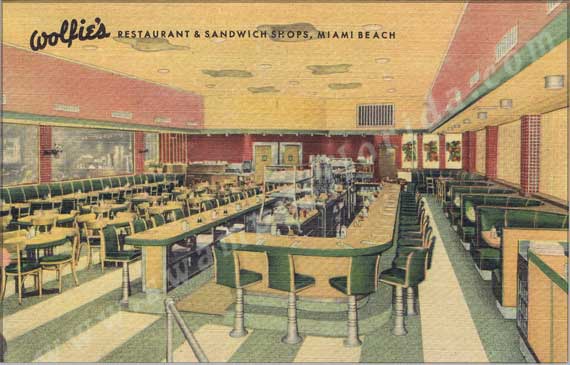
Generally I try to post images that appeal to my tastes – kitschy, graphic stuff, mostly color, mostly 20th century. I have found that Cracker architecture gets a good response, as does favorite eateries like the Kapok Tree or Wolfies. I try to slip in some Florida history now and then but it seems that the newer fans are really about Florida nostalgia more than anything else. It's an interesting process for me as I post images and speculate how popular they will be.  I've learned that pictures generate more response than links to websites and that photos shared for other Facebook pages can be just popular as original posts. Links from other pages also helps the original page that posted the image glean followers from the Old Florida page.

Classic Florida postcards like this tend to get a warm response

This image of manatees, linked from another page, was very well received

Wolfie's had locations throughout the state and well-remembered by my page's fans

Nostalgic images of familiar places also do well

Hard-to-imagine scenes of steamboats are popular

My goal with the page, and with this blog, however, is to create more awareness of some of the great Old Florida places that still exist, so that they have a chance to last well into the future. Over the summer that message has been pretty subtle, but as the weather cools off there will be more opportunity to promote festivals, rallies and benefits that support worthy causes. I'm hoping that with my new found audience, I can help support some of these worthy events.

This shot of Western Indians held at the fort in St. Augustine drew some surprising comments

Fun postcards with good graphics are my favorites

I like to add my own photography- this one from Marjorie Kinnan Rawling's house in Cross Creek

I love the kitschier shots from the State Archives

Some of Florida's oddities are fun to post – this one got a huge response

My poster design did fairly well recently

Old Florida fans loved remembering the milkman and Charles Chips

This one has several things going for it: Cypress Gardens
and the legendary Willa Cook and Dick Pope

The Holiday House was a well-remebered chain of restaurants started by Willa Cook

The other benefit of this page is that I learn from the fans and hopefully they learn from the stuff I post. Together we are creating a virtual community of people who care about the Florida's past. Hopefully, we can help shape a future based on preserving our state's colorful history and incredible natural resources.