
Greater Flamingo. Florida Native?
 Possibly. From eNature.com: "Resident in Bahamas, West Indies, Yucatan, northern South America, and Galapagos Islands. A casual visitor to U.S. coast from Carolinas to Texas. This species was formerly more numerous and probably bred at one time along the coast of Florida. Jeff Klinenberg reports in a 2002 St. Pete Times article: "Are they or are they not Florida residents? A prominent ornithologist described seeing an immense flock -- more than 2,000 birds -- near Cape Sable, in the western Everglades, in 1884. In 1901, an expert birder reported seeing a number of flamingos at Sugarloaf Key, near Key West, sitting on what appeared to be nests. Many experts today scoff. It's the only account of a flamingo nursery in the Florida wild. But nobody wants to say it's impossible."
Green Heron. Florida Native?
 Yes. From the Cornell Lab of Ornithology website: "A small, stocky wading bird, the Green Heron is common in wet spots across much of North America."
Parrot. Florida Native?
 No. This is the Yellow-naped Amazon Parrot. From Avianweb.com "Yellow-napes are endangered in their natural habitat which can be found along the Pacific Slope of Central America, in Southern Mexico and North-western Costa Rica."
Eastern Cottontail. Florida Native?
 Yes. From wikipedia: "The Eastern Cottontail can be found in meadows and shrubby areas in the eastern and south-central United States, southern Canada, eastern Mexico, Central America and northernmost South America."
Blue Tilapia. Florida Native?
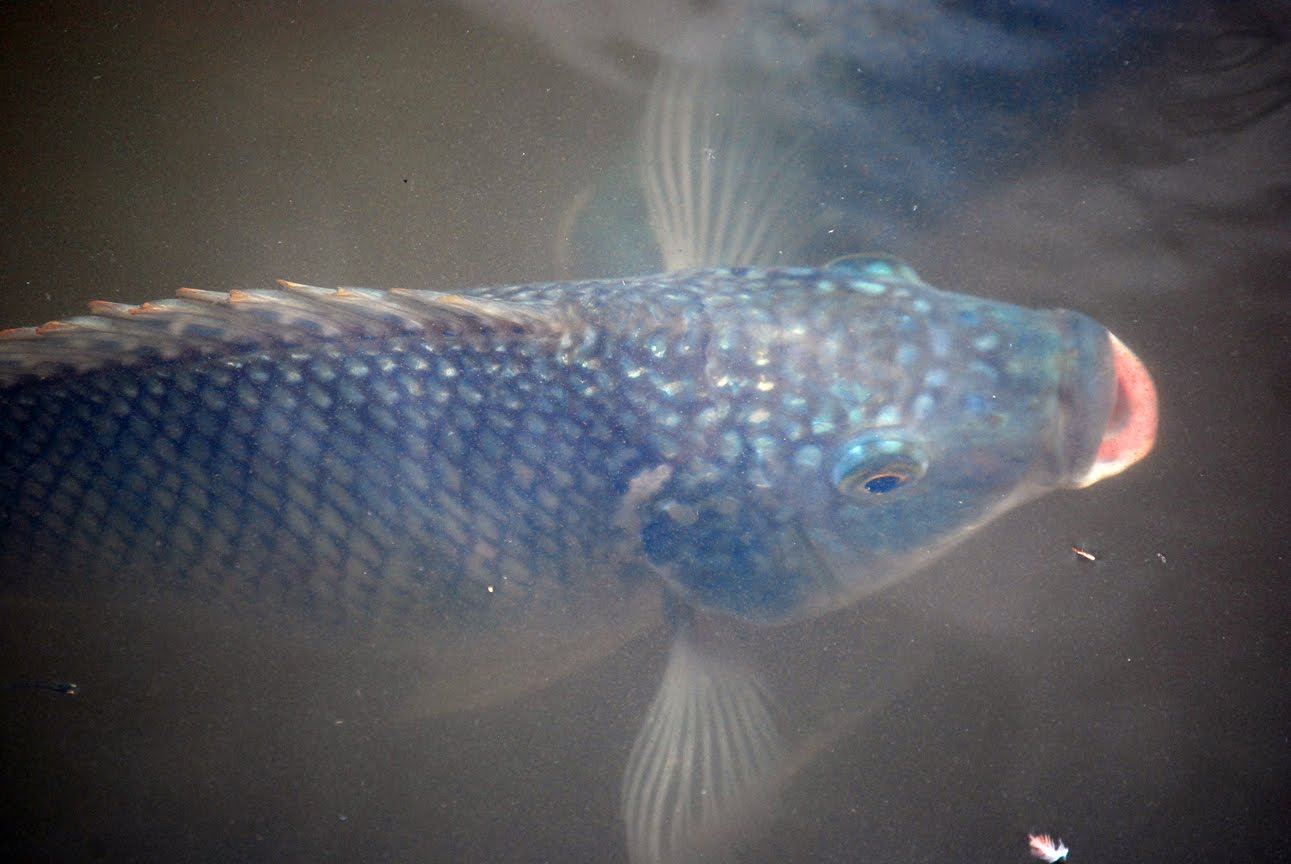
No. From the Environmential Defense Fund website: Most tilapia is imported from Latin America and Southeast Asia, where management and farming practices are less environmentally friendly than in the U.S. Since tilapia are not native to these areas, severe ecological damage can occur if tilapia escape to the wild.
Wood Stork. Florida Native?

Yes. From the Audubon website: "The striking, long-legged Wood Stork lives in colonies in cypress and mangrove swamps in the southeastern United States. It frequently flies in flocks, alternately flapping and gliding, or soaring on thermals to great altitudes. North America's only native stork, it is sometimes called "ironhead" or "flinthead" for its featherless, dark-skinned head."
Common Moorhen. Florida Native?
 Yes. From the Cornell Lab of Orinthology: "The most widely distributed member of the rail family, the Common Moorhen inhabits marshes and ponds from Canada to Chile, from northern Europe to southern Africa, and across Asia to the Pacific. Vocal and boldly marked, the species can be quite conspicuous, sometimes using its long toes to walk atop floating vegetation."
Peacock. Florida Native?
 No. From crystalinks.com: "Peacock or peafowl, large bird of the genus Pavo, in the pheasant family, native to E Asia. There are two main species, the common (Pavo cristatus), and the Javanese (P. musticus) peacocks, both found in deep forest where they travel in small flocks. A third type, the Congo peacock, was discovered recently in Africa."
Macaw. Florida Native?
 No. From Avian Web: "Their native habitats are the forests, especially rain forests, of Mexico and Central and South America."
Gopher Tortoise. Florida Native?
 Yes. From gophertortoise.org: "The gopher tortoises can be found throughout the state of Florida and southern areas of Georgia, South Carolina, Mississippi, Alabama and the tip of Eastern Louisiana."
Sandhill Crane. Florida Native?
 Yes. From the International Crane Foundation website: "Sandhill Cranes are the most abundant of the world's cranes. They are widely (though intermittently) distributed throughout North America, extending into Cuba and far northeastern Siberia. The three migratory subspecies (Lesser, Greater and Canadian) are distributed across a broad breeding range in the northern U.S. and Canada as well as eastern Siberia, with wintering grounds in the southern United States and northern Mexico. The three non-migratory subspecies (Mississippi, Cuban, and Florida) have restricted ranges in the southern United States and Cuba."
Black Vulture. Florida Native?
 Yes. From the Pergrine Fund website: "These vultures are found in lowland areas along rivers or in open habitats in the southern United States and throughout Central and South America."
Scoring:
12-10 correct answers: You're a genuine Florida Cracker
9-7 correct answers: You love your sunshine state critters
7-5 correct answers: You like pretty birdies but don't remember their names
4-2 correct answers: You rarely go outside because "they" might get you
2-0 correct answers: You've suffered major trauma to the head, and it's not your fault


