Showing posts with label Silver Springs. Show all posts

Tuesday, April 2, 2024

Award-winning design emerges from the ashes of Silver Springs fire

In December 1934, an advance group of four Seminole men began building a Seminole Village on a three-acre site, east of the swimming beach at Silver Springs. A group of 50 to 60 Seminole men, women, and children camped inside the park in an odd "living history" attraction near the same springs inhabited by Native Americans for hundreds of years (at least) prior. But this time they were on display for tourists visiting Silver Springs where they practiced traditional Seminole crafts and sold them as souvenirs.


The Seminole were apparently still living there early on the morning of June 15, 1955, when a young Seminole girl heard the sounds of a roaring fire and alerted Chief Robert Osceola. The Seminole leader then notified Oliver Allen of the Allen Reptile Institute, but by the time he reached the blaze the damage had been done. "Fire Guts Silver Springs" read the headline of the Orlando Evening Star, and the amount of destruction was estimated at a quarter of million dollars. "We are already making plans for a new building" Bill Ray, head of publicity for the attraction, was quoted as saying almost immediately. Then-owners of the park, W. Carl Ray Sr. and "Shorty" Davidson, quickly identified Sarasota architect Victory Lundy as the man to design the replacement buildings, and they quickly met and agreed on the scope of the project. 

The curved-building Lundy would design gracefully followed the contours of the famed spring basin where glass bottom boats floated above Mammoth Spring, the big reveal at the end of the magical ride over Florida's greatest natural wonder. The promenade fronted a 56,000 sq. ft. building with huge plate-glass windows, a staple of many mid century commercial buildings of what has come to be referred to as "Googie Architecture."  The flooring would be terrazzo, also standard for Florida mid-century architecture, but the entire structure would be air conditioned – then a novelty. 


A gushing newspaper review proclaimed that the new "sleeker structures" were constructed of "Sierra tan bricks" and featured the "abundant use of steel and glass." The new gift shop provided visitors with a "lovely tropical setting" and grounds surrounding the building have been "beautifully landscaped and provide great picture possibilities." The praise was well-deserved as Lundy's designs were recognized with accolades from Progressive Architecture magazine in 1956 and an award of merit by the AIA's national design competition in 1959. 

About the Architect

Victor Lundy from the Library of Congress

Lundy studied architecture at Harvard under the modernist legend and Bauhaus founder Walter Gropius.  He moved to Florida in 1951 and became part of what is now termed the Sarasota School of Architecture. On the occasion of his 100th birthday last year, world-architects.com posted this:

Lundy was trained in the Beaux Arts tradition at NYU (an education interrupted by WWII, where he earned a Purple Heart, a Victory Medal, and other honors) before venturing to Harvard GSD to learn by the Bauhaus method; such a traditional/modern education in architecture is, needless to say, a rarity. Following his Master of Architecture degree in 1948, a traveling scholarship, and years working for firms in New York City before licensure, he left for Florida and became a “member” of the so-called Sarasota School of Architecture. He designed houses, schools, and religious structures there in the 1950s before moving back to New York at the end of the decade, where he would work until the early 1980s, when he became a partner at HKS in Houston.

From the Library of Congress

from Wikimedia Commons

He created designs for many notable structures during his time in Florida – perhaps none as unforgettable as the breathtaking motel at Warm Mineral Springs.  Architect Magazine said this of the remarkable award-winning plan for the motor inn:

The U-shaped motel has a series of single-loaded rooms, entered from perimeter parking and overlooking a lushly planted courtyard. Above the rooms stand 14-foot-square, precast-concrete hyperbolic-paraboloid roofs that alter­nate in height. As originally constructed according to Lundy’s design, Plexiglas clerestories made the roofs appear to float, especially at night, with their undersides illuminated from within. “Designed to stop traffic,” Lundy said, the inverted roofs evoked the “fountain of youth” of the nearby warm mineral springs.

From Architect Magazine

From Life Magazine


Warm Mineral Springs Motel, 2011


The Lundy Center
Silver Springs has been a part of my life as long as I can remember. I grew up in Gainesville and before Disney World opened, all of our out-of-town guests were treated to a visit to Silver Springs. After I became an adult and moved to Orlando, years would pass between visits, but I experienced the Park in its many phases. My Dad and I almost missed a Johnny Cash concert because we were on the glass bottom boat. My wife and I visited on my birthday when the Park was full of exotic animals and a revolving tower lifted you over the spring. And when I heard stories of how the springs were impaired, I rented a canoe and discovered for myself how poor the water quality had become.

Throughout these changes Victor Lundy's pavilion has endured. When the State purchased the property, ending the roadside attraction era, the building showed its age. I had mixed opinions on my first few visits to Silver Springs State Park – I love the ability to kayak around the headspring but there was a huge void where all the animals and attractions had once been. The gift shop seemed a bit sad and the food offerings were underwhelming.

I visited last month, however,  and was pleased with what I witnessed. The parking lot was full and people were lined up to drop off their kayaks, canoes, and paddle boards. Lundy's building, now called "Lundy Center," had a new restaurant with a diverse menu and fun bar.  I ordered a falafel pita pocket and it was made fresh and very tasty. On this spring day the basin was full of people, paddling and experiencing what was formerly Florida's best attended tourist attraction and is now a much used State Park. 

March 2024

The Lundy Center still has issues – the restrooms were being renovated and based on appearances, they really needed a makeover. Exhibits from Silver Springs's glory days were scattered around in poorly lit areas and could do with better curation. But I could see behind the large plate glass windows, one area of the Lundy Center was being used for a private event, probably a wedding reception. The building now has a whole new life as a venue and as more resources are committed to its restoration, the space should only get better. 

Photographer: Lyn Larson | MAHAL IMAGERY

Just past Lundy's sweeping pavilion an interpretive marker explains the significance of the building's architect and introduces Lundy to a whole new audience who may never have heard of the Sarasota School of Architecture. In an op-ed I recently penned for the Sarasota Herald-Tribune, I proposed that the buildings at Warm Mineral Springs, designed by Jack West, another member of the Sarasota School of Architecture, might receive the same treatment. Currently, those structures are in rough shape and demolition is being considered. But one needs only to look to Silver Springs to see the potential for restoration and renewal. 


Saturday, September 5, 2020

Swimming at Silver Springs


The desire to jump into a pristine Florida spring can be overwhelming, especially in the dastardly days of summer. But states' most famous array of springs, Silver Springs, started out as a natural wonder worthy of awe and contemplation, long before it became a recreational resource for swimming. One of the first written accounts of Silver Springs, penned by an officer of the U.S. Army in 1826, described it as a "magical theatre of nature" where one would ponder in "our inward thought the marvelous works of the divine Maker of heaven and earth."

It is likely the hordes of Gilded Age visitors who arrived at Silver Springs by steamboats initially were just there for sightseeing. Attitudes towards swimming transformed later in the 19th century, as the exercise was looked at through distinctions of class. "Prior to the 1850s, middling and well-to-do Americans rarely lunged into natural waters for recreation or amusement" notes writer Jeff Wiltse in his book, "Contested Waters." That changed by the early 20th century as attitudes towards exercise and spending time outdoors were seen as healthy pursuits. But the presence of safety lines stretched across springs or extending into the surf in Gilded Age photographs seem to indicate that there were many during that time period who did not yet swim well.

At some point, however, swimming at Silver Springs became a popular attraction, and those who desired a plunge into the crystal clear waters found a way to whet their appetites. Perhaps the earliest evidence can be found in photographs showing a bathhouse at the spring. By the mid-twentieth century, swimmers competed with glass bottom boats and photo subs for space in the springs' main basin, which had a floating platform and a diving tower.

I have vague memories of visiting Silver Springs as a young child in the early 1970s, but no memories of swimming – only glass-bottom boats, the statue of Osceola, and the twisted horseshoe palm. I'm not sure when people stopped recreational swimming at Silver Springs – perhaps it was when the adjacent Wild Waters Water Park opened in 1978 – reflecting the public's emerging preference for a more sanitized swimming experience.

Decades passed between my visits to the park. As an adult at Silver Springs, I experienced a Johnny Cash performance during a thunderstorm while standing in several inches of water.  My wife and I witnessed the tail end of the theme park era when there were unhappy animals pacing in captivity. And later I returned to take pictures with my underwater point-and-shoot camera, canoeing up the Silver River, and avoiding alligators who seemed to want to eat my point-and-shoot camera. I've also reveled in the Old Florida experience of a glass-bottom boat ride.

Yesterday,  September 4, 2020, the Florida State Park system announced that in about eighteen months swimming will return to Silver Springs. On one hand, it would be a thrill to actually swim in Florida's most legendary springs, whose amazing waters made Harriett Beecher Stowe claim that there was nothing comparable to on the earth.  But I am nervous about the alligators, who have had the run of the place for quite a long time now. And I am concerned about the impact swimmers might have on the fragile ecosystem of the spring. Perhaps, it will open up the State Park to a whole new group of people – people who will become advocates for protecting the spring and restoring it to a pristine condition. That could be a good thing.

Update: According to this article in the Ocala Star Banner,  swimming at Silver Springs stopped in the 1950s because of liability issues. It returned briefly, however, in the summer of 1998.

It's likely most early visitors to Silver Springs entertained themselves simply looking into the "mysterious depths." Photo by the Detroit Publishing Company via the Library of Congress. 
Image from the State Archives of Florida titled "Silver Spings Florida bathhouse, 1916."
Real photo postcard with the caption "Glass Bottom Boats
on Mammoth Spring – Bathhouse – Silver Spring, Florida."
By the Jazz Age, Victorian modesty was forgotten and postcards
such as this showed the acceptability of public swimming.
Note this postcard uses the term "bathing" rather than swimming. 
There can be no doubt that underwater photography showing the clarity
of the springs had a sizeable role in encouraging public swimming.
This shows underwater pioneer Newt Perry swimming underwater
for Grantland Rice's first underwater film in 1924. 
With an assist from Newt Perry, Silver Springs served as the backdrop
for underwater photography for the "Life Saving & Water Safety" guide
created by the Red Cross that was first published in 1937.
An early underwater real photo postcard.
Photographer Bruce Mozert's surreal underwater images were published
in newspapers across the country, taking advantage of the water's amazing clarity.
Image from the State Archives of Florida.
I used this underwater beauty in the photomontage
for the cover of my first book "Finding the Fountain of Youth."
The water clarity was ideal for motion pictures as well.
Here's Newt Perry with Johnny Weissmuller and Johnny Sheffield
 during the filming of "Tarzan Finds a Son" in 1939.
Image from the State Archives of Florida.
Esther Williams jokes around during the filming of "Jupiter's Darling"
in 1954 at Silver Springs.
Image from the State Archives of Florida.
Howard Hughes 1955 film "Underwater" took advantage of the water clarity
with the world's first underwater premiere of a motion picture.
Jane Russell, however, was upstaged by Jayne Mansfield's "wardrobe malfunction."
Image from the State Archives of Florida.
"Revenge of the Creature" was also filmed at Silver Springs in 1954.
Image from the State Archives of Florida.
Frequent Mozert underwater model and Esther Williams double, Ginger Stanley Hollowell,
 set a record for swimming the entire seven-mile length of the Silver River.
Read more about Ginger here. Image from the State Archives of Florida.
During segregation, a separate attraction for African Americans
called Paradise Park was operated by Silver Springs' owners.
It was located east of the Silver Springs attraction.
Image from the Gainesville Sun.
This rendering shows the bathhouse, swim shop, and bathing area just above the legend.
An early postcard shows the swimming amenities at the spring. 
This postcard from the State Archives almost looks more like a swimming pool. 
A more contemporary postcard view. 


Five photos illustrating swimming at Silver Springs
from the Mozert Collection at the State Archives of Florida.

Silver Springs 2013. 
Silver Springs from a 2009 visit.

To learn more about early tourists to Florida's Gilded Age watering spots, check out my new book, "Florida's Healing Waters."

Friday, January 17, 2020

Inside the studio of the legendary Bruce Mozert


It seems like Bruce Mozert's work is everywhere these days. An exhibit called "Underwater Innovations: The Florida Springs Photography of Bruce Mozert" recently opened in Tallahassee. The 2020 calendar produced by the State Archives of Florida features Florida springs and uses many of his images. Because the State Archives accessioned the Bruce Mozert Collection in 2018, they scan new Mozert images seemingly every week, and copious amounts of his magical photos crowd my social media feeds. The collection contains approximately 25,000 negatives, thousands of prints, and hundreds of films. Mozert was prolific.

Learn more here: https://bit.ly/2TwSY9c


On December 29, 2014, I had the pleasure of meeting this pioneer in underwater photography. Gary Monroe's book "Silver Springs: The Underwater Photography of Bruce Mozert" helped to elevate Mozert's work to the status of fine art, but originally he was a successful commercial photographer based at Silver Springs. His creative and campy underwater images were sent to wire services nationwide and helped to make Siver Springs into one of the highest attended attractions anywhere.


 A Mozert photo reproduced in the Pittsburgh Press in 1954

Gary set up the meeting with Mozert and I was accompanied by my Springs Eternal Project partners John Moran and Lesley Gamble. I was inspired by the meeting and took pages of notes but for some reason, I never wrote about it until now. According to Wikipedia, Mozert was born in 1916, which means he would have been 98 when we visited! He passed away less than a year later on October 14, 2015.


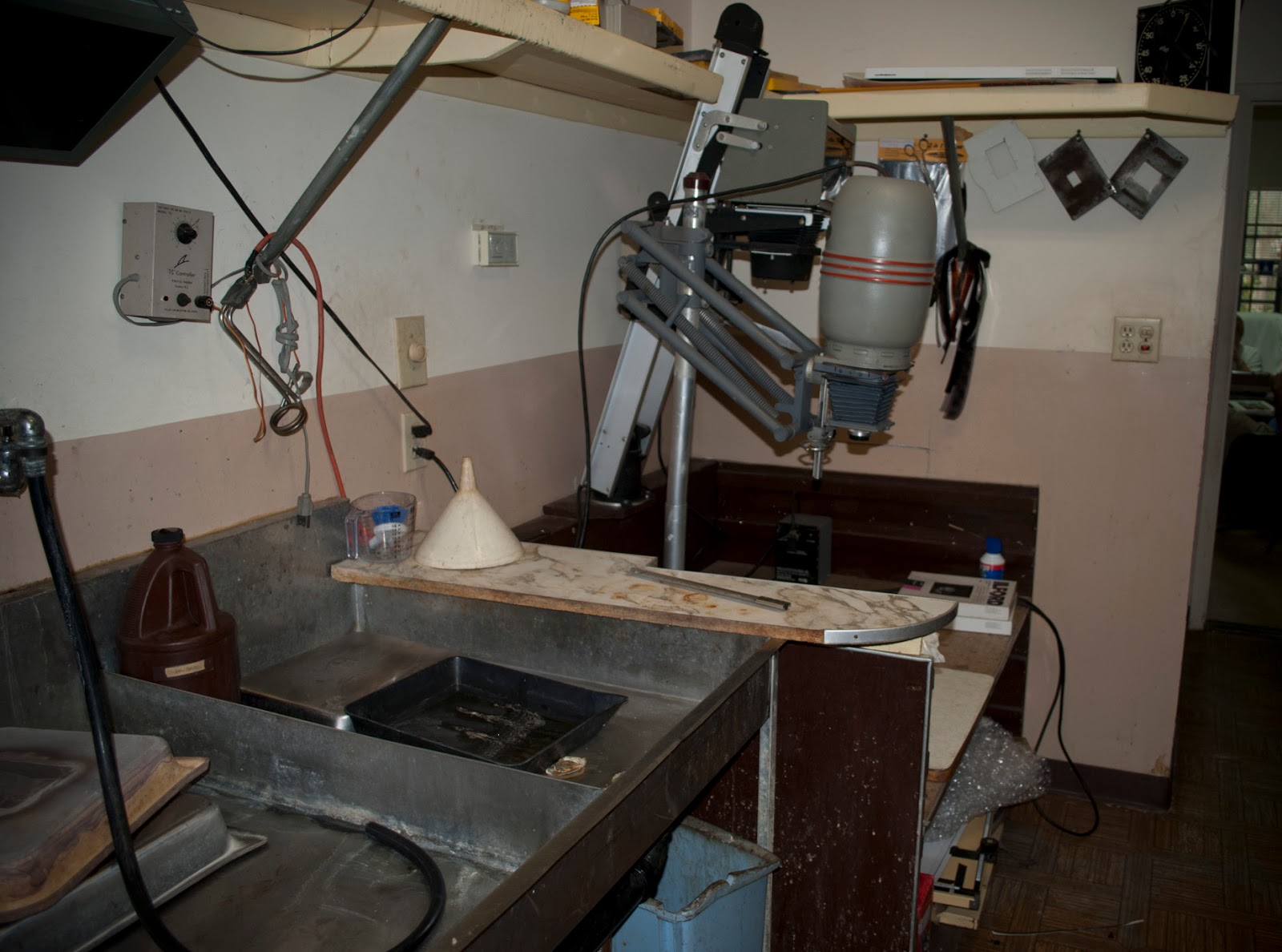
His studio at the time was in a nondescript building near Silver Springs. The space was packed with photos, still and video equipment (all analog), and miscellaneous ephemera all over the walls. My kind of place. The front reception area had a stack of prints for sale, for sale at reasonable prices, a fact that made Gary cringe since he was working hard to establish Mozert's work as fine art, worthy of art galleries and museums. In the back was a darkroom and film editing equipment, and his office, packed with mementos and images of almost a half-century of work at Silver Springs. Photos covered almost every inch of wall. Gary helped get the reproduction rights for the use of one of Mozert's images in my first book, "Finding the Fountain of Youth," and I was extremely grateful. I proudly presented him with a copy of the book.

Photo by John Moran
Mozert photo in my book


This is from my notes:

According to Mozert, he came from a family of inventors. His father, grandfather and great grandfather were all inventors. His sister was a well-known illustrator in New York and she helped Mozert get a photography gig for a shoe company. He was headed to Miami for the assignment when he detoured to Silver Springs because he heard they were making Tarzan movies there. The underwater photography of the day used 55-gallon drums as underwater housings. Mozert built his housing from a piece of an inner tube connected to a metal box that he welded to hold the camera. It took him almost all night to make the apparatus and he bought an underwater mask at a dime store.

He also talked about the infamous preview of Howard Hughes movie "Underwater" starring Jane Russell where Jane Mansfield quite literally burst upon the scene, a story I had heard from Ginger Stanley Hollowell as well. Mozert claimed that he took a revealing photo that helped Mansfield get noticed. Lloyd Bridges, who filmed "Sea Hunt" at Silver Springs, was "down to earth," but he said Esther Williams whom he worked with on "Jupiter's Darling" was "temperamental."

He also reminisced about "blasting out the spring underwater" with a firehose and dumping seashells from the ocean into the spring for photography purposes, two practices that the State of Florida would probably frown upon today. He seemed aware of the declining condition of Florida's springs noting that the water table was going down, and that man had "tampered with (nature) so much."

Women in Jantzen bathing suits posing by a sign for the underwater theater 
at Silver Springs, from the State Archives of Florida.

After spending time talking to Mozert in his studio, we offered to take him to lunch, and I had the opportunity to drive him to a pizza place on Silver Springs Boulevard. At the restaurant, they had several of his photos framed on the wall, and the photographer proudly posed in front of this work. He seemed to enjoy the attention and telling stories from his past. Sadly as I search my memories of my impressions of Mozert years after the visit, I wish I remembered more. I recall that he seemed proud of his involvement with local civic organizations – he had Lions Club memorabilia displayed on his wall next to hand-tinted images of bikini-clad underwater models. I was overwhelmed by the office and studio, it seemed like a time capsule from Florida's Golden Age of Roadside Attractions that was unchanged by time.


Writer Jeff Klinkenberg states that in its heyday, Silver Springs was a wonder of the world – Florida's Grand Canyon. I'm fascinated with the people who inspired so many tourists to visit this now-famous remote location near Ocala. The spring's owners, Carl Ray and W.M. "Shorty" Davidson, were extraordinary marketers who came up with novel, innovative methods of promoting the attraction. Newt Perry, the "human fish," was featured in Mozart's underwater images and he developed unique techniques to stay underwater that were used at Wakulla and Weeki Wachee Springs. Ginger Stanley started out doing office work and ended up as a model in many iconic Mozert images. Ross Allen dedicated almost fifty years to studying the wildlife around the park at his reptile institute. To me, these individuals were icons in Florida history – people who had a huge impact on our state's development who created ripples that still reverberate today. And Bruce Mozert, who found himself in the right place at the right time and ended up spending a lifetime creating enchanting images, is foremost among these pillars of tourism history. For me, this trip to Mozert's studio was like visiting a temple of Old Florida. I am grateful for the opportunity to have made the pilgrimage.


Bruce Mozert with flash and underwater camera from the 1950s via the State Archives of Florida.